
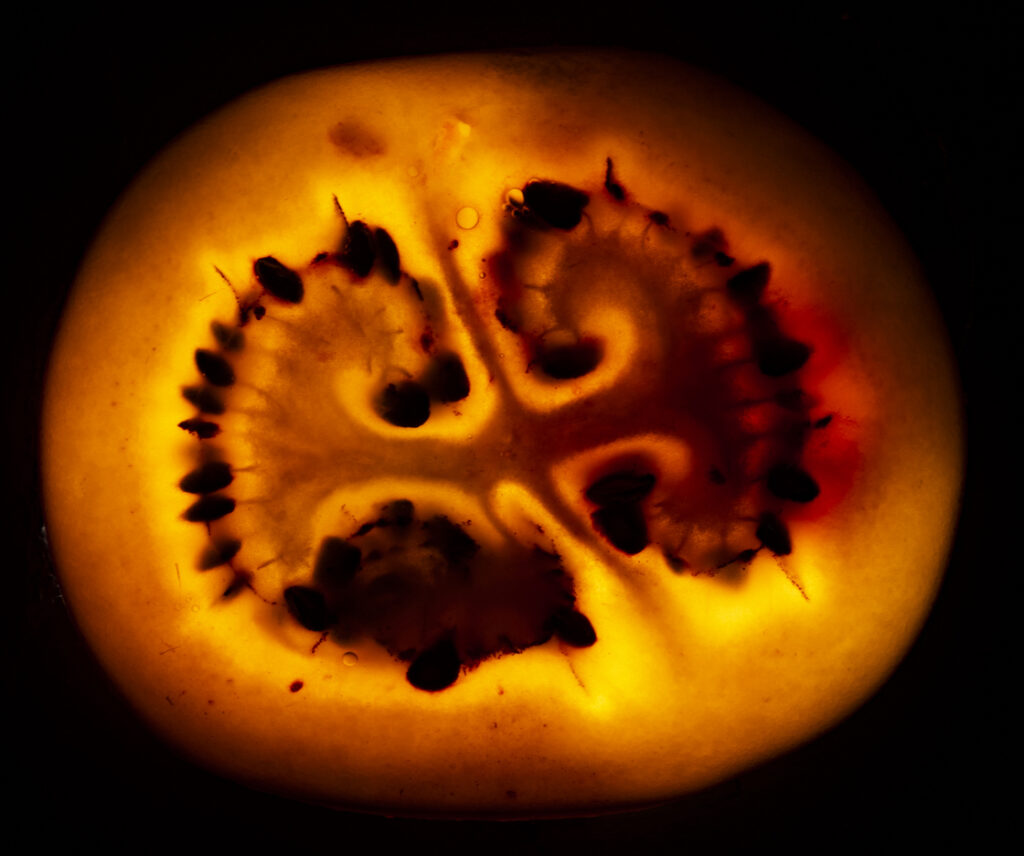
Empowering growers and packers to look deep beneath the skin of fresh produce
How Advanced Spectral Imaging and Automation Redefine Produce Quality Control

Consumer expectations for fresh fruit and vegetables have never been higher. Today’s shoppers demand pristine quality, absolute safety, and long shelf life. However, traditional visual sorting methods that rely on human inspection or basic RGB surface cameras fall short of meeting these expectations. They only capture external appearance, completely missing internal rot, sub-surface bruising, early-stage disease, hidden insect infestations, and foreign contaminants.
At Cortha, we are bridging this gap. By harnessing the power of Near-Infrared (NIR), Multispectral, and Hyperspectral Imaging, we empower growers and packers to look deep beneath the skin of fresh produce. As a core sector focus for our engineering teams, our advanced automated sorting and packing systems deliver rapid returns on investment (ROI) by intercepting and rejecting defects right at the beginning of the post-harvest chain.
The Science of Seeing Within: NIR, Multispectral, and Hyperspectral Imaging
Unlike standard cameras that only register red, green, and blue light (RGB), advanced spectral imaging technologies analyse broad and continuous swathes of the electromagnetic spectrum, extending from the visible range into the short-wave infrared (SWIR).
- Near-Infrared (NIR) Imaging: Focuses on wavelengths typically between 700 nm and 1100 nm. It is exceptionally sensitive to moisture, internal bruising, and sugar content, making it ideal for checking internal hydration and ripeness without damaging the item.
- Multispectral Imaging: Captures targeted, discrete spectral bands (usually between 4 to 20 specific wavelengths). It provides a cost-effective, high-speed solution for detecting specific chemical signatures, surface contaminants, and clear structural surface or sub-surface flaws.
- Hyperspectral Imaging (HSI): Operates across hundreds of contiguous spectral bands simultaneously. HSI generates a complete “hypercube” dataset for every single pixel, providing a detailed chemical and physical fingerprint of the produce. This allows systems to spot microscopic decay, hidden internal cavities, chemical residues, and early fungal infections long before they manifest on the outer skin.
Detecting the Invisible: What Spectral Imaging Finds
When produce moves along a processing line, Cortha’s imaging systems scan for indicators that consumers reject:
- Infestations & Disease: Larvae, boring insects, and fungal spores alter the local moisture content and cellular structure of the plant tissue, which displays a distinct spectral shift.
- Internal Rot & Bruising: Impacts cause cell walls to rupture, releasing enzymes and altering local biochemical properties that absorb or reflect NIR light differently than healthy tissue.
- Foreign Objects: Plastics, stones, glass, or metal fragments embedded in or mixed with harvested crops possess entirely different spectral responses, allowing instant identification.
- Maturity and Internal Defects: Hollow heart, core breakdown, or incorrect sugar content (soluble solids content) are quantified on the fly.
Proven Applications Across Fresh Produce
Cortha’s imaging and sorting solutions have been successfully implemented across several major crop categories where internal quality is paramount:
1. Asparagus
Asparagus is notoriously prone to internal woodiness, hollow stem, and tip rot, which cannot be detected from the outside. NIR and hyperspectral imaging evaluate the internal fiber density and moisture profile of each spear, ensuring only tender, high-grade asparagus reaches premium packaging.
2. Sweetcorn
Sweetcorn cobs often hide insect damage (such as corn borer larvae), kernel abortion, and fungal infections beneath the husk. Multispectral and NIR inspection systems pierce through the outer husk layers to evaluate kernel fullness, sugar concentration, and sanitary safety without manual peeling.
3. Pineapple
Internal browning, core rot, and uneven maturity (measured via soluble solids content) are major challenges in pineapple processing. Hyperspectral mapping enables accurate, non-destructive assessment of the internal flesh condition across individual fruit segments, guaranteeing uniform sweetness and preventing spoiled fruit from entering supply chains.
4. Soft Fruit
Soft fruits—such as strawberries, blueberries, raspberries, and blackberries—present a unique challenge due to their delicate cellular structure and extremely short shelf life. Traditional mechanical grading or manual handling frequently causes crushing, bruising, or accelerates decay.
Cortha’s integration of high-speed NIR and hyperspectral imaging allows for entirely non-contact, non-destructive evaluation of soft fruit batches moving at high line speeds. The technology detects subtle changes in moisture content and cellular integrity to instantly spot early-stage mold, micro-cracks, leaks, and soft spots (such as early gray mold or anthracnose infection) before they compromise surrounding fruit in the punnet or clamshell. Furthermore, spectral sorting can accurately gauge sugar content (soluble solids) and ripeness levels simultaneously, ensuring uniform batches with extended retail shelf life.
5. Root Vegetables
Beyond potatoes, a wide variety of root vegetables; such as carrots, parsnips, beetroots, and turnips, require rigorous post-harvest evaluation. Because these crops grow underground, they are uniquely susceptible to hidden soil-borne diseases, internal corkiness, woody fiber development, and internal cavities caused by pest damage or irregular watering.
Cortha’s NIR and multispectral imaging systems inspect root vegetables as they rush along processing lines, looking past muddy surfaces and thick skins to identify:
- Internal Cavities and Pithiness: Spotting hollow cores or spongy, degraded tissue inside carrots and radishes before packaging.
- Sub-Surface Pest Damage: Detecting tunnels, larvae, or feeding scars left by wireworms and root maggots that leave the outer skin intact.
- Early Rot and Disease: Identifying black rot, cavity spot, and bacterial soft rots in their earliest stages, preventing single infected roots from spoiling an entire batch during long-term cold storage.
Other Successful Applications
Beyond these crops, these technologies are deployed globally for apples (internal browning and core rot), citrus fruits (juice content and peel disorders), and leafy greens (foreign material screening).
The Cortha Advantage: Automation, Cost Efficiency, and Workforce Optimisation
For growers and packers, profitability hinges on minimising waste and reducing labour overheads. Cortha’s automated sorting infrastructure is engineered for maximum financial and operational impact.
Rapid Return on Investment (ROI)
By deploying advanced spectral detection at the very beginning of the post-harvest process, Cortha systems filter out defective, diseased, or contaminated produce immediately. This early rejection saves substantial downstream capital:
- Reduced Transportation & Storage Costs: Growers do not waste energy, water, or packaging materials on produce destined to spoil or be rejected by retailers.
- Enhanced Brand Protection: Preventing sub-standard or contaminated goods from reaching consumer markets eliminates costly product recalls and protects brand reputation.
High-Speed Divergers and Robotic Precision
Once Cortha’s software identifies substandard items, high-speed mechanical divergers instantly and precisely divert defective produce off the main line. Simultaneously, our deployment of advanced industrial robots takes over the heavy lifting of picking and packing high-grade produce with exceptional speed, gentleness, and accuracy.
Human-Centric Workforce Redeployment
Agricultural labour shortages are a persistent challenge. By automating the monotonous, repetitive, and fatiguing tasks of sorting and packing, Cortha enables growers to redeploy human workers into higher-value, more demanding roles—such as quality management, equipment oversight, and facility logistics—that automation cannot easily replace.
Through the fusion of cutting-edge spectral intelligence and robust robotic automation, Cortha turns post-harvest processing from a labour-intensive bottleneck into a streamlined, highly profitable engine of quality.
This system was delivered through our Agritech group company www.ro-pro.com