
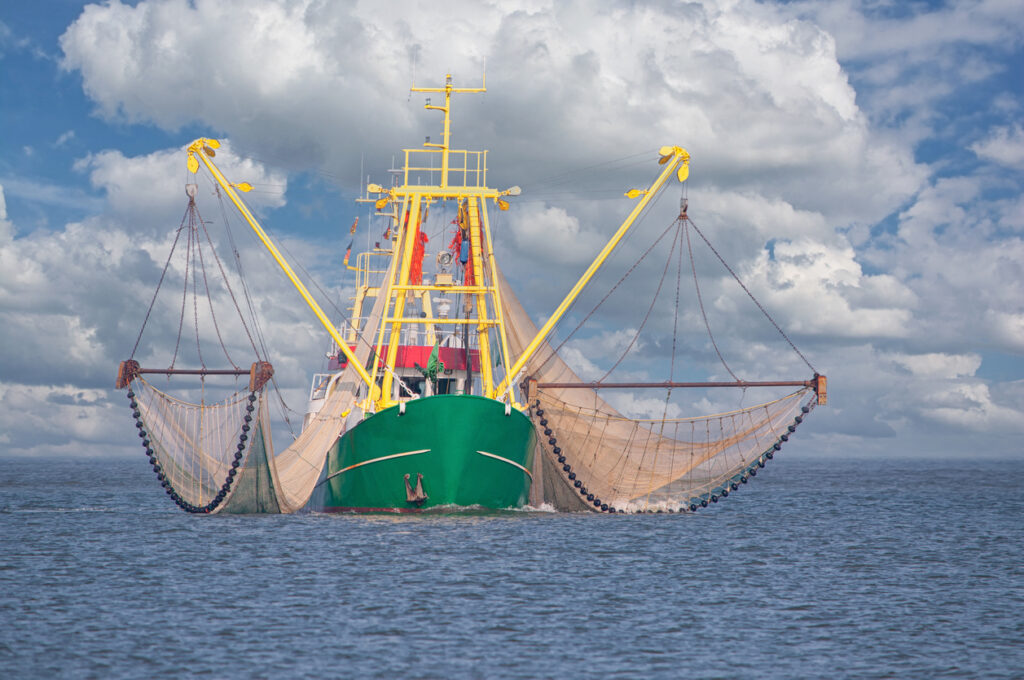
From real-time vessel-based catch inspection to sub-millimetre robotic meat extraction
AI and Machine Vision are Transforming Industrial Fisheries and Seafood Processing

The commercial fishing and seafood processing industries operate under demanding conditions. Marine environments subject equipment to salt spray, cold temperatures, and constant deck motion, while processing lines face high throughput demands and natural biological variability. Historically, sorting, species identification, vitality checking, and meat extraction relied heavily on manual labour or mechanical methods that risk damaging fragile catches.
With global regulatory pressures tightening and marine conservation taking centre stage, industrial vision systems powered by deep learning are providing necessary solutions. Pioneering engineering teams at Cortha are bringing automated 3D machine vision and multi-spectral AI out of the laboratory and directly onto fishing vessels and factory floors.
1. Mitigating By-Catch and Protecting Marine Stocks
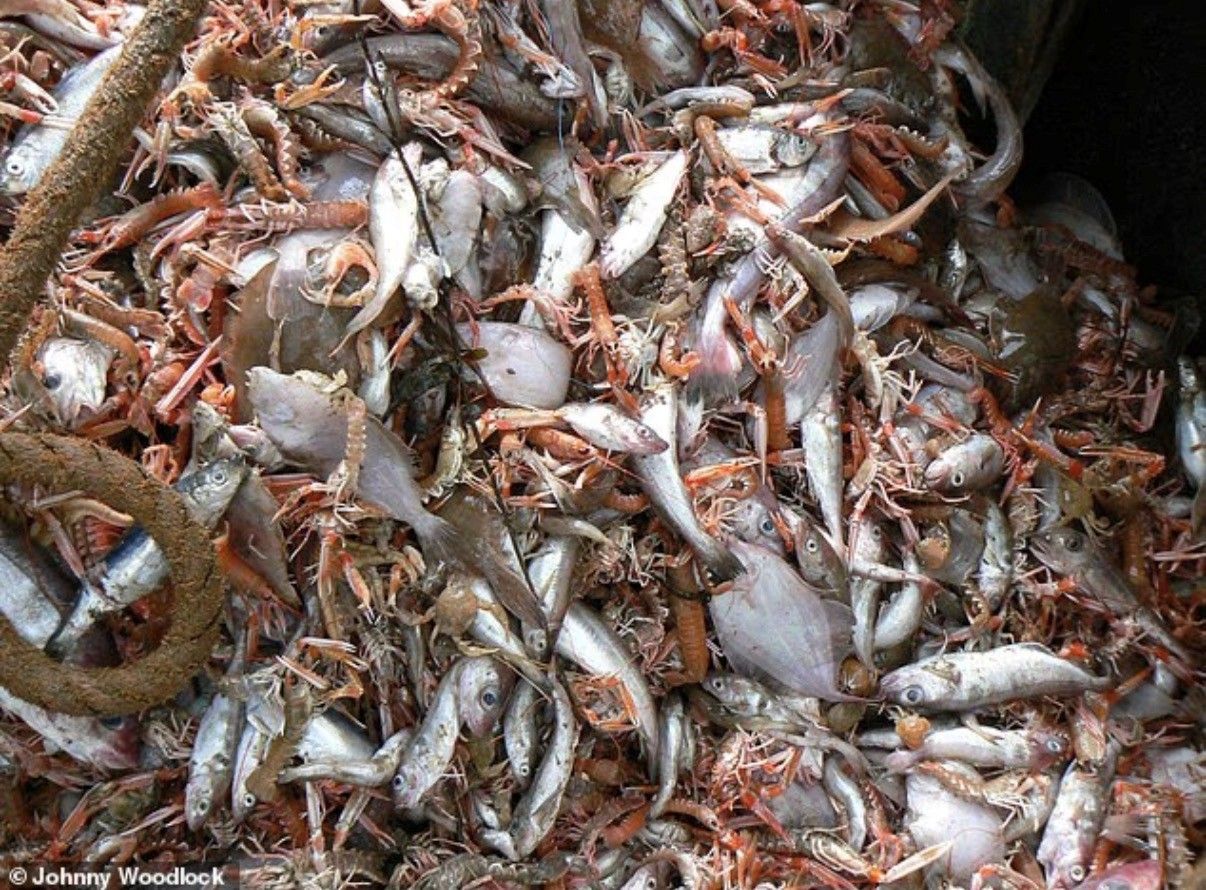
By-catch: the accidental capture of non-target marine species, juvenile fish, or breeding females—remains one of commercial fishing’s greatest sustainability challenges. According to estimates by the Food and Agriculture Organisation (FAO), global fishing discards total approximately 9.1 million tonnes annually, representing roughly 10% of total catch, with certain bottom-trawling operations recording discards as high as 30% to 50%.
Traditional deck sorting requires crew members to manually pick through landed catch under time pressure. Delayed deck sorting increases mortality rates for non-target species before they can be returned to the water.
Machine vision systems offer rapid, non-contact evaluation of every landed item directly on the intake conveyor:
- Instantaneous Species & Morphometric Analysis: Optical arrays capture high-speed images to measure length, volume, and species attributes in milliseconds.
- Automated Conservation Return: In langoustine (Nephrops norvegicus) trawling, female conservation is essential for stock renewal. Cortha’s onboard inspection system identifies egg-bearing (‘berried’) females carrying egg masses under the abdomen, as well as mature females in the reproductive phase (‘green-head’).
- Gentle Pneumatic Sea Return: Upon identifying a berried female, the system triggers an immediate pneumatic divert gate that routes the live specimen down a dedicated water slide back into the sea. This minimises out-of-water exposure, significantly boosting survival rates and meeting environmental mandates.
2. Onboard Real-Time Inspection: Stress Monitoring and Catch Telemetry
Catch quality degrades rapidly if crustaceans undergo high physical or metabolic stress during capture. Compression in trawl nets and prolonged deck handling lead to lactic acidosis, muscular degradation, and mortality in live holding tanks.
Through projects like Tide2030, Cortha has developed integrated marine inspection stations capable of processing 1 unit per second (up to 2,400 units/hour per station) with an inspection latency under 600 ms. The system evaluates live vitality across multiple parameters:
| Metric | Healthy Baseline | Severe Capture Stress Marker | Machine Vision / Sensor Detection Method |
|---|---|---|---|
| Carapace Coloration | Translucent pale orange/pink appearance. | Bright pink hue or dark grey discoloration caused by acidosis. | Calibrated RGB spectral color space analysis against baseline bounds. |
| Tail-Fan Reflex | Rapid abdominal flexes and active reflex movements. | Sluggish, delayed, or absent tail-fan displacement. | Multi-frame motion tracking measuring displacement velocity across frames. |
| Muscular Integrity | Firm muscle structure and rigid carapace. | Softened muscle texture and post-stress autolysis. | 3D volumetric deflection analysis and optical translucency mapping. |
Prawns exhibiting severe stress markers are dynamically re-routed to immediate frozen processing or tailing, while healthy, low-stress specimens are directed to live transport tanks.
Simultaneously, the onboard gateway aggregates vision-derived metrics with exact GPS coordinates, water depth, and environmental factors, streaming telemetry to the Cortha Dashboard via satellite. Vessel owners gain live visibility into catch composition, while fisheries protection authorities receive auditable proof of regulatory compliance and berried sea returns.
3. High-Precision Robotic Factory Processing: Intact Shell Extraction
In primary onshore processing plants, mechanical handling often destroys product value. Processing thawed langoustines into high-value whole scampi tails traditionally required passing tails through pinch rollers to squeeze out the meat. However, pinch rollers bruise delicate flesh, drive shell fragments into the meat, and lead to product downgrades. The alternative—manual high-pressure gas lances—placed high-pressure needles directly in operators’ hands throughout shifts.
To solve this, we collaborated with our automation partners to engineer an automated, vision-guided robotic extraction cell for a global seafood producer:
How the Vision-Guided Extraction Cell Works:
- Structured-Light 3D Sensing: A structured-light 3D vision head captures incoming thawed tails, measuring shell geometry and calculating a full 6-DoF (Degree-of-Freedom) spatial pose (0.4 mm accuracy) rather than a flat 2D silhouette.
- Volumetric Pulse Scaling: The vision algorithm estimates the internal shell volume from 3D surface profiles.
- Robotic Injection: A vision-guided robotic arm receives the pose coordinates in under 215 ms and presents a gas needle to the shell opening, injecting a metered gas pulse whose pressure and duration scale dynamically with measured shell volume.
- Safety & Efficiency: Operators remain entirely outside the guarded IP69K-rated cell, eliminating needle hazards while producing whole, intact tails.
4. Deep Learning Edge Architectures in Maritime Applications
Deploying vision systems aboard active vessels or in hosed-down seafood plants requires software and hardware designed for harsh conditions:
- Handling Specular Reflection and Glint: Wet carapaces and glossy fish scales produce harsh specular highlights. Modern spatial-spectral neural networks separate surface glint from actual biological features, evaluating underlying tissue colour, translucency, and defects accurately.
- Sub-Gigabit Edge Inference: Satellite bandwidth at sea is limited. Deep neural networks run locally on compact industrial smart cameras (e.g., IP67-rated units) or localised edge GPUs. The models execute segmentation, classification, and motion tracking within a strict 200–600 ms latency window, sending only compressed metadata to the cloud.
- 3D Surface & Spectral Fusion: By pairing 3D laser/structured-light profiling with multi-spectral or SWIR (Short-Wave Infrared) cameras, vision systems distinguish organic tissue from foreign contaminants (such as clear plastic films or shell fragments) based on chemical absorbance rather than colour alone.
Summary Impact Comparison
| Process Category | Traditional / Manual Method | Cortha Machine Vision Automation | Measured Operational Impact |
|---|---|---|---|
| Conservation & Sorting | Manual deck picking; delayed return of by-catch. | Real-time optical sexing & berried female identification with automated sea return. | Reduced stock damage; instant compliance verification via telemetry. |
| Quality & Vitality Grading | Subjective visual checks; high mortality in holding tanks. | Spectral hue analysis & multi-frame motion tracking of tail-fan reflexes. | Early stress detection; protection of Grade Extra live market value. |
| Shell Meat Extraction | Mechanical pinch rollers or manual gas lances. | Structured-light 3D vision guiding robotic gas injection. | +19% intact yield, -86% flesh damage, 0 operators exposed to hazards. |
By bringing modern deep learning algorithms onto the deck and into the processing hall, vision-guided automation is helping the commercial fishing industry protect marine ecosystems while maximising production quality and operator safety.
