How Smart Cameras Are Empowering Production Engineers and Elevating Quality Control
Precision at Scale

A Smart Camera is not something that the Cortha Team normally specify, mainly because the complex inspection and sortation systems that we develop require more power and capability than a smart camera can currently offer.
However, there is one sector where the smart camera comes into its own and despite our scepticism with these devices, we are very happy to be providing this technology to our customer.
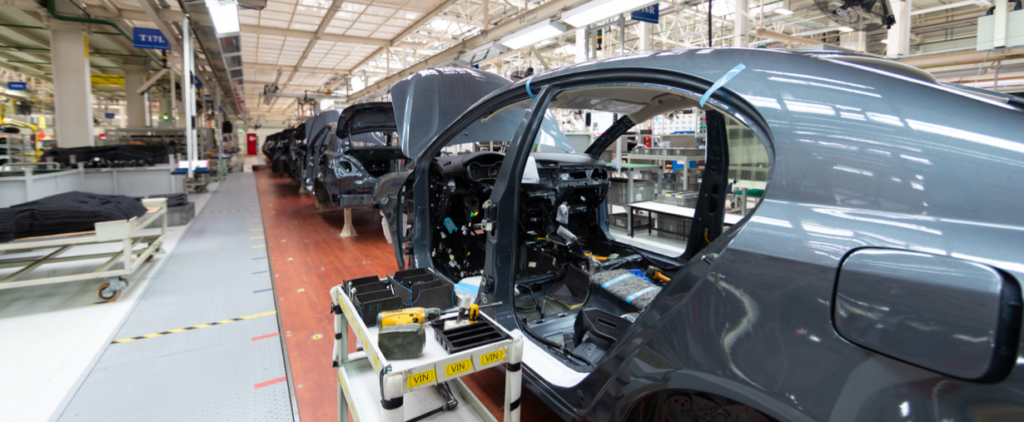
The automotive manufacturing sector has long been a crucible for automation. Decades ago, as vehicle customisation expanded and takt times shrank to mere seconds, plant managers faced an unavoidable reality: manual inspection could no longer keep pace with modern production lines.
Human operators excel at complex reasoning, but fatigue, distraction, and line speed make 100% manual quality verification impossible at high throughputs. Missed assembly errors carry staggering costs, ranging from costly line stoppages and immediate rework to massive safety recalls and brand erosion. To achieve zero-defect manufacturing while pushing line speeds higher, the automotive industry was forced to become an early, aggressive adopter of machine vision technology. What began as simple photoelectric sensors and basic optical character recognition (OCR) has evolved into sophisticated, real-time vision verification embedded directly onto the assembly floor.
Assembly Lines: The Natural Home for Smart Cameras
Historically, implementing high-performance vision meant deploying bulky PC-based systems—requiring dedicated industrial PCs, complex cabling, external lighting controllers, and specialised software runtimes. While effective for niche off-line tasks, these systems often proved cumbersome along continuous assembly lines where space, robust environmental protection, and low maintenance are paramount.
Enter the modern smart camera.
By integrating image acquisition, high-speed embedded processing, illumination, and onboard I/O into a single industrial enclosure, smart cameras offer the ideal footprint for line-side assembly verification. They process images locally at the edge, execute algorithm toolsets directly on internal hardware, and output instant PASS/FAIL decisions or data packets straight to line PLCs.
Multi-Point Verification with the HIKROBOT SC6000 Series
At Cortha, we have delivered the HIKROBOT SC6000 series smart camera across automotive assembly stations to tackle critical verification tasks on a single, continuous line. Equipped with extensive vision toolsets—ranging from geometric pattern matching and feature measurement to deep learning classification—the SC6000 series brings high-tier inspection power directly to the fixture edge.
Key assembly verification applications successfully deployed include:
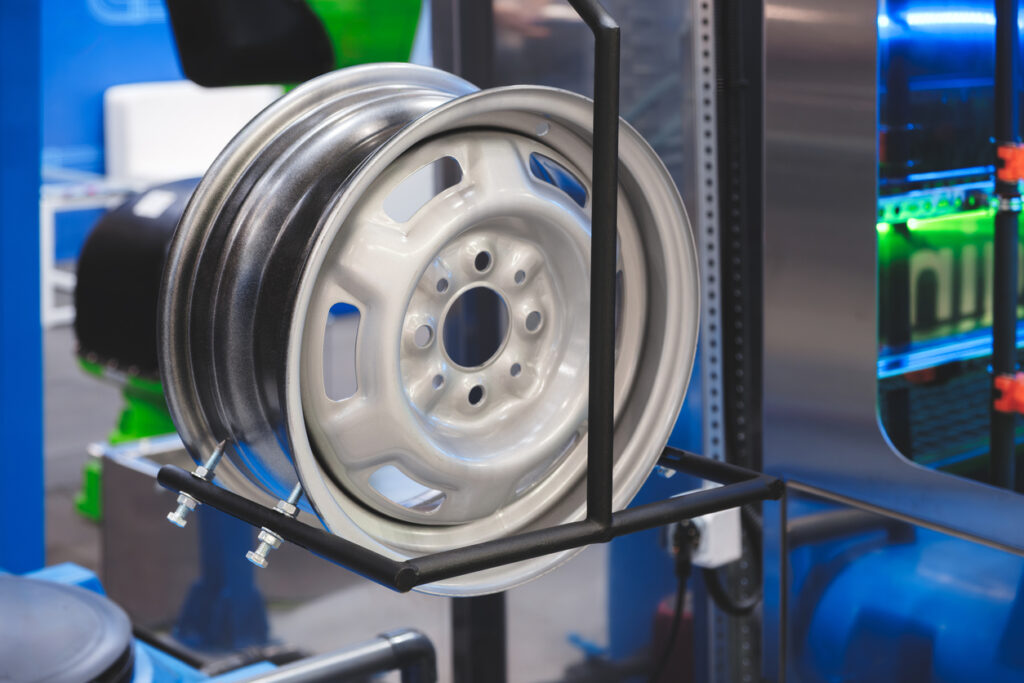
- Tyre & Wheel Specification Verification: Verifying that the correct wheel rim and tyre variant (matching the vehicle’s build specification sheet) have been selected and fitted before the chassis moves down the line. Vision tools inspect sidewall markings, tread patterns, and rim geometry in real time.
- Multi-Brand Front Badge & Trim Identification: In modern, flexible automotive plants where vehicles from multiple distinct brands or sub-models run sequentially down the exact same line, verifying trim and branding is critical. Smart cameras inspect the front fascia to ensure the correct emblem and model badge are installed according to the specific build code for that VIN.
- Wheel Hub Nut Presence & Fastener Verification: Ensuring all wheel hub nuts are correctly present, properly seated, and match required design specifications prior to torque operations.
| Inspection Station | Verification Task | Key Risk Mitigated |
|---|---|---|
| Tyre & Wheel Station | Sidewall, tread, and rim variant matching | Incorrect performance tyre fitted; mixed wheel sizes on same chassis |
| Fascia & Trim Station | Brand emblem & model badge presence/type | Incorrect brand logo applied in multi-brand manufacturing facilities |
| Hub Assembly Station | Fastener presence, count, and seating | Missing or cross-threaded hub fasteners entering downstream stations |
Empowering Production Engineers: The Next Generation of Vision
One of the most significant shifts in modern machine vision is the democratisation of hardware configuration. In the past, tweaking a vision program or setting up a new product variant required calling in specialised vision integrators or software developers.
With systems like the SC6000 series and VisionMaster software, embedded execution is paired with intuitive visual configuration workflows. Production engineers on the factory floor can easily train new model parameters, fine-tune tool regions, or adjust lighting conditions on-site.
Our approach at Cortha centres on providing expert initial integration, tailored optical selection, and robust system architecture. With that strong foundation in place, local production engineering teams are fully empowered (with just a small amount of initial guidance from us) to manage, expand, and train the smart cameras independently as new vehicle variants and line updates roll out.
By combining accessible edge processing with expert integration support, smart camera technology continues to reinforce its role as the backbone of modern automotive quality control.