
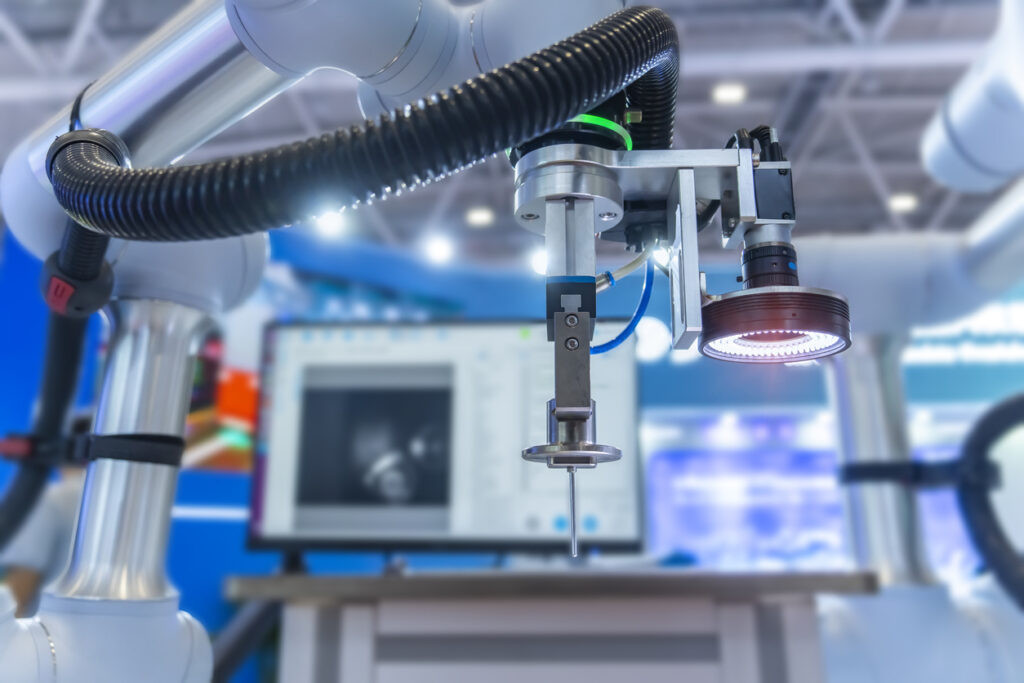
From real-time defect detection to 3D robotic guidance, automated optical inspection is driving unprecedented quality, throughput, and labour savings across global supply chains.
How Machine Vision is Reshaping Modern Manufacturing

In an era where manufacturing margins are constantly compressed by rising labour costs, global competition, and strict regulatory standards, operational excellence requires absolute precision. Historically, quality control relied on human inspectors performing manual sample checks—a process inherently limited by fatigue, subjectivity, and human error.
Today, industrial machine vision systems—combining high-resolution 2D and 3D sensors, specialised optics, artificial intelligence, and edge computing—are transforming production floors. By transitioning from periodic spot-checking to 100% continuous, inline optical inspection, manufacturers are drastically reducing scrap rates, eliminating labour-intensive bottlenecks, and guaranteeing flawless product delivery.
1. Core Applications Across the Manufacturing Spectrum
Machine vision is no longer confined to basic barcode scanning. It has evolved into an essential operational driver across every stage of the production cycle.
Automated Quality Assurance & Surface Inspection
High-speed line-scan cameras and polarized lighting arrays can inspect continuous materials moving at high line speeds.
- Composite & Automotive Web Inspection: Systems capture microscopic surface flaws, fibre mis-alignments, resin deficiencies, and structural micro-creases in pre-preg materials before assembly.
- Food & Agriculture: Non-destructive 3D and optical imaging systems rapidly grade fresh produce, detect foreign objects, or inspect organic products for micro-defects at industrial processing speeds.
3D-Guided Robotics & Autonomous Assembly
Adding optical vision to multi-axis industrial robots elevates static machinery into dynamic, adaptive systems.
- Precision Guidance: 3D stereo vision and laser profiling project spatial coordinates onto complex contours, enabling robots to execute precise drilling, countersinking, and sealant application with sub-millimetre positioning accuracy.
- Bin Picking & Material Handling: Vision-equipped robots can identify randomly oriented components in tote bins, pick them cleanly, and position them accurately for down-line assembly, reducing manual loading requirements.
In-Line Process Monitoring & Non-Destructive Testing (NDT)
Advanced optical technologies extend inspection capabilities beyond human visual limits.
- Short-Wave Infrared (SWIR) & Hyperspectral Imaging: By capturing light outside the visible spectrum, SWIR and hyperspectral sensors evaluate chemical compositions, inspect internal moisture levels, and detect sub-surface stress cracks without damaging high-value components.
- Thermal Monitoring: Infrared thermal vision tracks heat generation across electronic assemblies or mechanical joints, identifying potential failures before expensive tools or parts are damaged.
Logistics, Warehouse Traceability & Digital Twins
Machine vision acts as the primary data generator for modern smart factory architectures. Automated readers scan optical barcodes, QR codes, and direct part markings (DPM) at every stage. Every inspection image, point cloud, and defect record is automatically linked to a component’s serial number, generating an immutable digital twin for audit compliance and predictive tool maintenance.
2. Quantifying the Value: Manual vs. Machine Vision Inspection
Replacing manual quality control with automated machine vision delivers measurable improvements across key financial and operational metrics.
| Metric | Manual Quality Control | Automated Machine Vision | Strategic Business Impact |
|---|---|---|---|
| Inspection Coverage | Spot checking (10%–50% sample rate) | 100% real-time continuous scanning | Complete elimination of defect escapes |
| Detection Accuracy | ~0.5 mm (subject to fatigue) | Microscopic precision (< 0.05 mm) | Early structural defect identification |
| Labor Allocation | High reliance on skilled inspectors | Fully automated inline operation | Direct reduction in ongoing labor overhead |
| Throughput Speed | Limited by manual handling rates | Operates at full conveyor line speed | Higher overall factory output & lower cycle time |
| Data Traceability | Paper logs & manual entries | Instant digital logging & spatial tagging | Reduced recall liability & audit readiness |
3. Technology Enablers Accelerating Adoption
The rapid expansion of machine vision across modern factories is driven by several recent technological breakthroughs:
- AI & Neural Network Classification: Traditional rule-based machine vision often struggled with organic or variable surfaces. Deep learning algorithms trained on defect datasets easily separate superficial visual blemishes from true structural failures, eliminating costly false rejections.
- Edge AI Processing: Embedded vision systems process complex neural networks directly on camera hardware or localised edge computers. This low-latency architecture enables real-time pass/fail decisions directly on production lines without reliance on remote cloud infrastructure.
- Multimodal Sensor Fusion: Combining 2D colour images, 3D depth maps, and thermal or SWIR signals into unified data streams gives automated systems complete perception of complex manufacturing environments.
Industrial machine vision has transitioned from a specialised, late-stage quality check into an essential core engine of modern manufacturing. By slashing manual labour dependency, driving scrap rates toward zero, and accelerating throughput, automated vision systems offer a clear, rapidly realised return on investment. As AI algorithms and optical sensors continue to advance, vision-driven automation will remain a central pillar of competitive manufacturing worldwide.
Industry-Agnostic Expertise: Solving Challenges Everywhere
The Cortha team possesses the unique skills and proven expertise required to deploy advanced machine vision and robotic solutions across virtually any industrial sector. Our extensive track record—featuring successful projects spanning aerospace, nuclear, pharmaceutical, automotive, and fisheries—demonstrates an unmatched ability to apply core 2D/3D machine vision and AI technologies to diverse, complex, and high-stakes environments.
Powered by a pragmatic, “no-nonsense,” hands-on engineering approach, Cortha adapts seamlessly to any production constraint or harsh operating condition. Whether solving “un-automatable” challenges like carbon fibre defect detection or guiding autonomous robotic polishing cells, Cortha delivers reliable automation solutions regardless of the industry.
